
How to Navigate the Crypto Fraud Legal Process in 2026
Victims of cryptocurrency fraud who act within hours of discovery give investigators the best chance of freezing stolen assets before they are dispersed beyond reach. The legal steps for crypto fraud follow a clear sequence: file immediately with the FBI’s IC3, notify the FTC, SEC, and CFTC, report to the involved exchange, preserve all transaction records, and engage a qualified crypto fraud attorney to coordinate forensic tracing and legal filings.
- File a detailed complaint at IC3.gov, including wallet addresses, transaction hashes, amounts, dates, and any scammer identifiers.
- Submit parallel complaints to the FTC at ReportFraud.ftc.gov, the CFTC at CFTC.gov/complaint, and the SEC at sec.gov/tcr.
- Report directly to the crypto exchange used in the transaction to trigger internal fraud protocols and potential asset freezes.
- Contact local law enforcement to create an official record supporting civil and criminal proceedings.
- Preserve every communication, wallet address, account log, and transaction record without alteration.
- Retain a credentialed crypto fraud attorney before engaging any third-party recovery service.
- Reject any recovery service demanding upfront fees or guaranteeing results. The FBI explicitly warns that fraudulent recovery services frequently cold-call victims after initial theft.
What is cryptocurrency fraud and what scam types should victims recognize?
Cryptocurrency fraud covers any scheme that uses deception to steal digital assets or induce victims to transfer funds under false pretenses. Because blockchain transactions are irreversible and pseudonymous, the window for intervention is narrow, making early recognition critical.
Common scam types include:
- Phishing: Fake websites or emails impersonating exchanges, wallets, or government agencies to harvest credentials.
- SIM swap: Attackers hijack a victim’s phone number to bypass two-factor authentication and drain accounts.
- Approval phishing (“pig butchering”): Victims are manipulated into approving wallet access via fake prompts, granting scammers full control of funds.
- Fake exchanges and tokens: Fraudulent platforms or newly issued coins designed to collect deposits before disappearing.
- Ponzi and investment schemes: Promises of guaranteed returns funded by new investor deposits rather than actual trading.
- Social engineering and impersonation: Scammers pose as government officials, tech support, or romantic interests to coerce transfers.
Traceability on the blockchain is real but bounded. Forensic analysts can follow transaction flows across public ledgers, yet funds routed through mixers, privacy coins, or offshore wallets become practically unrecoverable. Blockchain tracing is most effective when stolen assets reach a regulated exchange where legal process can be enforced.
Pro Tip: Screenshot every communication, URL, and wallet address the moment you recognize a scam. Metadata embedded in those files can become critical forensic evidence.
How does the legal recovery process work for crypto fraud victims?
Two principal recovery routes exist: criminal proceedings and civil litigation. They are not mutually exclusive, and the practical answer for most victims is to pursue both in parallel.
Criminal route: Reporting to IC3 triggers FBI investigation, which can lead to asset seizure through criminal forfeiture under 18 U.S.C. § 982 and restitution orders under the Mandatory Victims Restitution Act, 18 U.S.C. § 3663A. The government controls this process. It costs the victim nothing but is slow, often taking years, and recovers only what is found and seized.
Civil route: Victims can file claims independently, including fraud, conversion, securities violations under Section 10(b) of the Securities Exchange Act, commodities fraud under the Commodity Exchange Act, and civil RICO claims where racketeering patterns apply. Civil litigation is victim-controlled but requires attorney fees and produces a judgment that is only collectable if the defendant is solvent and reachable.
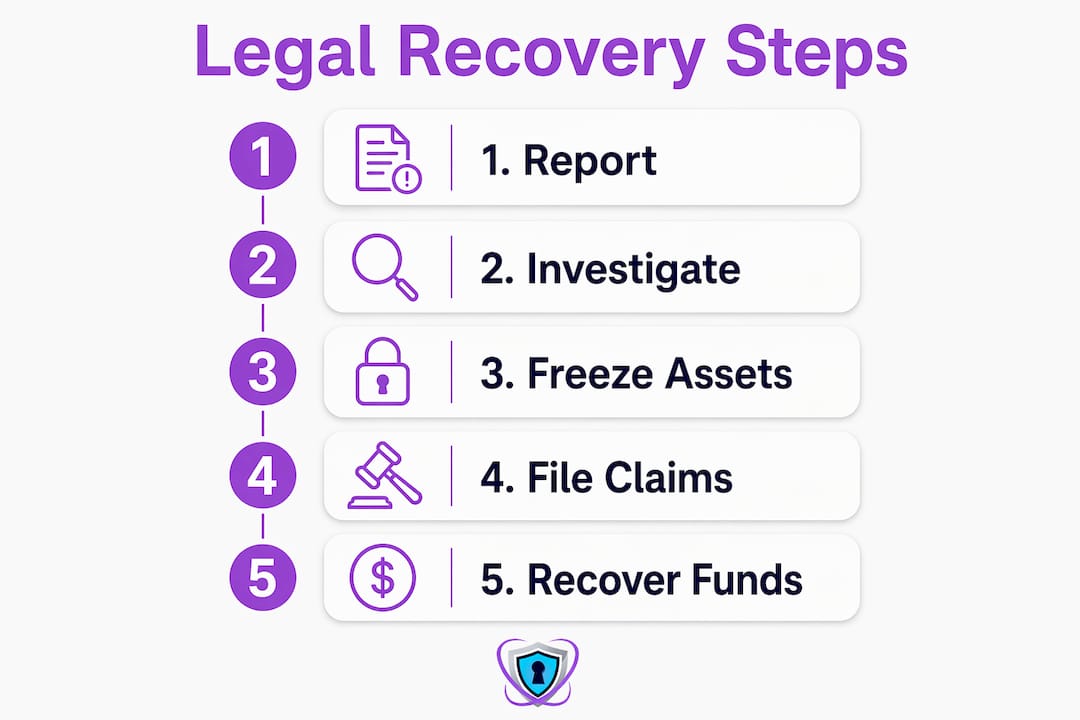
Key steps in the recovery workflow:
- Report to IC3 and relevant agencies immediately.
- Notify the exchange to request an internal freeze.
- Retain an attorney to assess civil claims and statutes of limitations.
- Commission forensic tracing to map asset flows.
- Seek prejudgment remedies: temporary restraining orders and asset freeze orders.
- Pursue subpoenas to exchanges for KYC data identifying account holders.
- Proceed to civil judgment or await criminal forfeiture distribution.
Speed of reporting is the single most important variable. Assets reported within hours can sometimes be frozen; the same assets discovered weeks later have usually been converted and dispersed.
How do you find and work with a qualified crypto fraud attorney?
Selecting the right legal counsel determines whether forensic evidence translates into recoverable assets. Firms such as Phillips Law Group, The Beckage Firm, and Kim & Serritella LLP have established practices in digital asset fraud, combining litigation experience with forensic coordination capabilities.
Criteria for evaluating prospective attorneys:
- Demonstrated experience in cryptocurrency fraud litigation, not just general financial fraud.
- Familiarity with blockchain forensic tools and the ability to work alongside forensic analysts.
- Transparent fee structures: contingency, hourly, or hybrid arrangements.
- Track record with regulatory agencies including the SEC, CFTC, and DOJ.
- No upfront guarantees of recovery, which signal a recovery scam rather than legitimate counsel.
Questions to ask before retaining:
- Have you handled cases involving the specific scam type I experienced?
- How do you coordinate with forensic tracing specialists?
- What is your fee structure, and what costs should I anticipate?
- What is a realistic recovery timeline given the facts of my case?
- Will you pursue both criminal reporting and civil claims simultaneously?
Legal practitioners advise retaining an attorney for significant losses to coordinate forensic tracing with subpoenas and asset-freeze orders. Victims should verify bar credentials through state bar association databases before signing any engagement agreement.
Which agencies should you report to, and what are the forensic realities?
Reporting to the right agencies simultaneously maximizes the chance of coordinated action. Each agency serves a distinct function in the investigative and regulatory ecosystem.
- FBI IC3 (ic3.gov): Central intake for cyber-enabled fraud; feeds intelligence to field offices and can trigger asset freezes at exchanges.
- FTC (ReportFraud.ftc.gov): Tracks consumer fraud patterns and can pursue civil enforcement against fraudulent operators.
- CFTC (CFTC.gov/complaint): Has jurisdiction over commodity fraud, including most non-security cryptocurrencies.
- SEC (sec.gov/tcr): Handles fraud involving tokens classified as securities.
- Local law enforcement: Creates an official police report essential for civil proceedings and insurance claims.
- Crypto exchanges: Exchanges have legal obligations under consumer protection laws but often resist action without legal pressure.
Blockchain transparency is a genuine investigative asset, but recovery ultimately depends on stolen funds reaching a regulated exchange where courts can enforce legal orders. Funds that move only through self-hosted wallets, privacy protocols, or offshore venues remain traceable in theory but practically unrecoverable without international cooperation.
Pro Tip: If real currency was used to purchase crypto before the fraud, notify your bank or credit card issuer immediately to pursue wire recalls or chargebacks under U.S. consumer protection regulations.
How do lawyers assist victims in tracing and legal recovery?
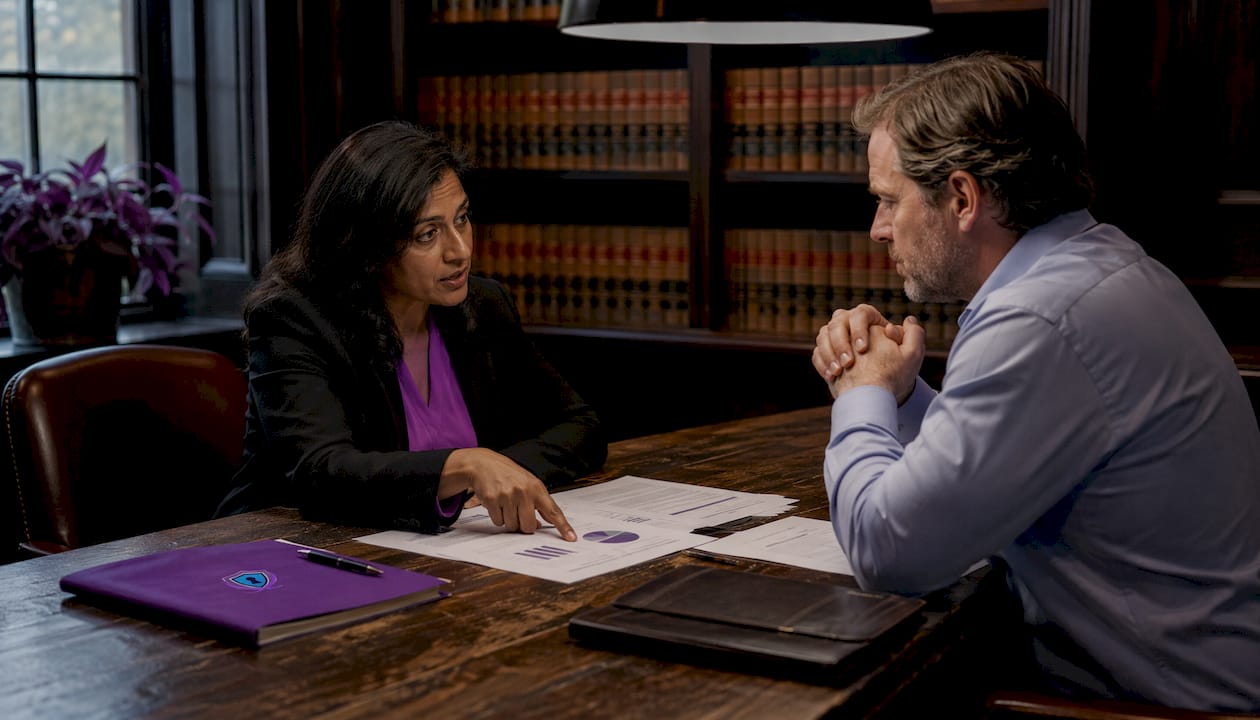
Attorneys working crypto fraud cases do more than file complaints. They coordinate the full operational layer connecting forensic analysis to enforceable legal outcomes. A qualified attorney commissions blockchain forensic analysts to map transaction flows, identify exchange deposit addresses, and produce evidentiary exports admissible in court. That tracing work then supports subpoenas to exchanges for KYC data, which can identify the account holder behind a receiving wallet. Attorneys also file for prejudgment asset freezes, which are often more consequential than the final judgment because they prevent dissipation before a case resolves. Aegisfinancialforensics pairs AI-driven forensic tracing with legal coordination, having assisted with over $34 billion in illicit funds seized or recovered across more than 1,500 cases. For victims assessing their options, understanding how forensic experts build fraud cases clarifies what evidence attorneys need to act.

What is the realistic timeline for crypto fraud legal recovery?
The legal process for crypto fraud recovery rarely resolves quickly. The criminal route, from IC3 report through investigation, prosecution, forfeiture, and victim distribution, commonly takes years. Civil litigation moves faster when defendants are identifiable and solvent, but even expedited cases typically require 12–36 months from filing to judgment. Prejudgment asset freezes can be obtained within days of filing if evidence supports emergency relief. Exchange-level freezes, when requested immediately after discovery, can occur within 24–72 hours. Statutes of limitations for civil claims vary by claim type and jurisdiction, and several begin running from the date of discovery rather than the date of the fraud, making early legal assessment critical.
What costs and fees should victims expect when pursuing legal action?
Fee structures in crypto fraud cases vary by attorney and case complexity. Contingency arrangements, where the attorney collects a percentage of recovered funds, are available for cases with identifiable, solvent defendants. Hourly billing applies more often to complex multi-jurisdictional cases or those involving regulatory proceedings. Hybrid structures combining a reduced retainer with a contingency on recovery are common. Forensic tracing services carry separate costs, typically scoped to the complexity of the transaction graph. Court filing fees, process server costs, and expert witness fees add to the total. Victims should request a written fee agreement before any work begins and confirm that no upfront payment is required before the attorney has assessed the case.
What legal rights and protections do US crypto fraud victims have?
US victims hold more legal standing than many realize. Federal statutes including the Mandatory Victims Restitution Act require restitution upon conviction for fraud offenses. Civil RICO provides treble damages where a pattern of racketeering is established. Securities and commodities laws supply private rights of action where the defrauded asset qualifies under those frameworks. Cryptocurrency payments do not carry the same protections as credit or debit card transactions, but victims retain the right to pursue civil claims, cooperate with federal investigations, and seek prejudgment remedies. Older victims can contact the National Elder Fraud Hotline at 833-372-8311 for assistance filing IC3 complaints.
How should victims gather and preserve evidence for legal proceedings?
Evidence integrity determines whether forensic tracing produces admissible results. Victims should preserve all communications, transaction records, wallet addresses, and account logs without modification. Screenshots should capture full browser URLs and timestamps. Transaction hashes, amounts, asset types, and dates must be recorded in a written log. Email and messaging threads should be exported in their native format rather than copied as plain text. Victims who used fiat currency to fund transactions should retain bank statements and wire transfer confirmations. For a structured approach to evidence collection, Aegisfinancialforensics details the types of crypto fraud evidence that hold up in legal proceedings. Avoid deleting any account or application associated with the fraud, even if it appears inactive, as metadata within those records can support entity attribution during forensic analysis. Partner resources such as crypto tracing methodology guides can help victims understand what forensic analysts look for before their first attorney consultation.
Key Takeaways
Victims who report to the FBI’s IC3 immediately, preserve complete transaction records, and retain a credentialed crypto fraud attorney give coordinated forensic and legal efforts the best realistic chance of recovery.
| Point | Details |
|---|---|
| Report immediately to IC3 | File with the FBI’s IC3 first, then the FTC, CFTC, SEC, and the exchange used. |
| Speed determines recovery | Assets reported within hours can sometimes be frozen; delays typically put funds beyond reach. |
| Two recovery routes exist | Criminal forfeiture and civil litigation are not mutually exclusive; pursue both in parallel. |
| Evidence integrity is critical | Preserve transaction hashes, wallet addresses, and communications without alteration before contacting attorneys. |
| Avoid recovery scams | Reject any service demanding upfront fees or guaranteeing results; verify credentials before engaging. |
Aegisfinancialforensics has assisted with over $34 billion in illicit funds seized or recovered across more than 1,500 cases. If you have experienced cryptocurrency fraud, the clock starts the moment you discover the loss. Contact Aegisfinancialforensics to initiate a crypto fund recovery investigation and put forensic tracing and legal coordination to work on your case immediately.