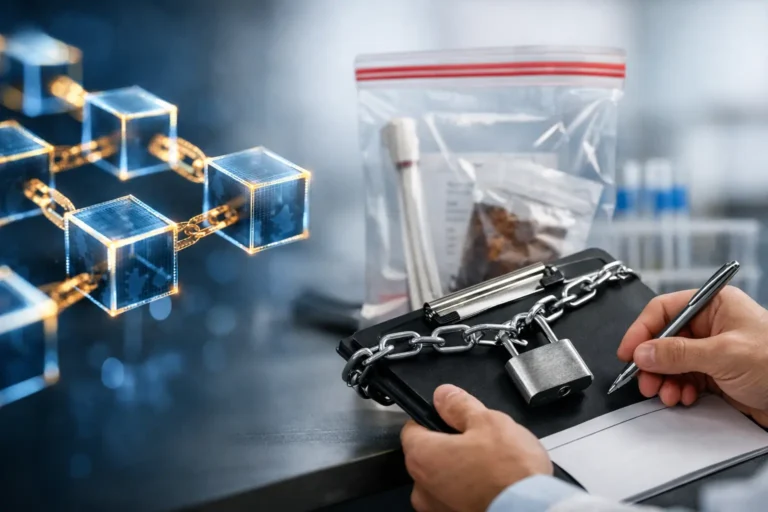

What Is a Forensic Recovery Process? A 2026 Guide
A forensic recovery process is defined as the systematic, legally defensible method of acquiring, preserving, extracting, and analyzing digital evidence to recover lost or deleted data without compromising its admissibility in court. Unlike standard data recovery, which prioritizes speed and file restoration, forensic recovery follows strict protocols aligned with SWGDE 2025–2026 standards that govern evidence integrity from the moment a device is seized. For individuals and businesses targeted by cryptocurrency scams or financial crimes, understanding what is a forensic recovery process is the first step toward reclaiming lost assets and building a legally sound case.
What are the key steps in a forensic recovery process?
The forensic recovery process follows a strict multi-phase methodology: identification, evidence preservation, technical extraction, forensic analysis, and reporting. Each phase builds on the previous one, and skipping any step risks invalidating the entire investigation.
1. Identification and assessment
Investigators first catalog every device, account, or data source connected to the incident. This includes smartphones, laptops, cloud storage, and blockchain wallets. Damaged or powered-off devices receive special handling to prevent further data loss before imaging begins.

2. Evidence preservation
Examiners create a bit-by-bit image of each storage medium using write blockers, hardware devices that prevent any data from being written back to the original source. The image is then hashed, typically using SHA-256, to generate a cryptographic fingerprint. Any future tampering becomes mathematically detectable.
3. Technical extraction
Forensic extraction levels include logical, file system, physical, and RAM extraction. Physical extraction is the gold standard because it accesses every sector of a drive, including unallocated space where deleted files reside. RAM extraction captures volatile data such as decryption keys and active session tokens before the device powers down.
4. Forensic analysis
Raw extracted data requires expert parsing. Investigators reconstruct file systems, extract metadata, and run timeline analysis to connect events to specific timestamps and actors. App-specific databases from platforms like WhatsApp or Telegram require specialized parsing tools to render evidence readable.
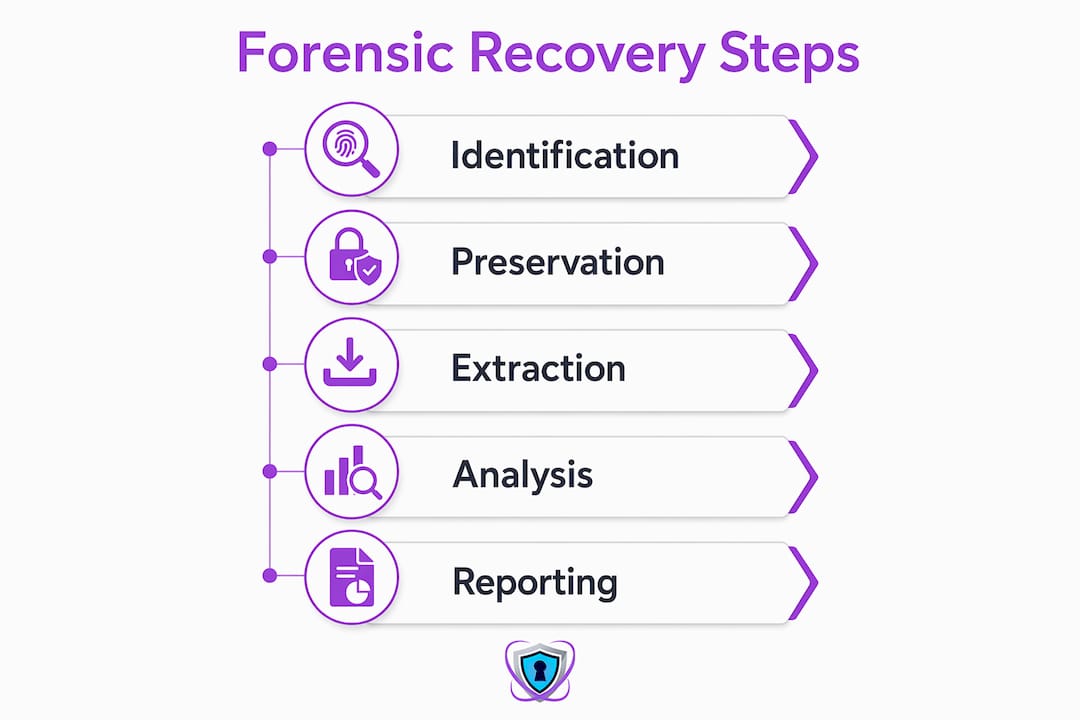
5. Reporting and documentation
Every tool used, every hash value generated, and every procedural step taken must appear in the final forensic report. This documentation maintains the chain of custody and supports court admissibility.
Pro Tip: Engage a forensic examiner before powering a suspect device back on. Booting a device without write protection can overwrite unallocated sectors and permanently destroy recoverable evidence.
How do forensic recovery techniques differ from standard data recovery?
Standard data recovery restores accessible files as quickly as possible. Forensic recovery does something fundamentally different: it prioritizes evidence integrity over speed, documenting every action to withstand legal scrutiny. The distinction matters enormously in financial crime cases, where recovered data must survive cross-examination.
The core technical differences include:
- Write blockers: Forensic examiners always use hardware write blockers during imaging. Standard recovery tools often write directly to the source drive, contaminating the evidence.
- Immutable imaging: Forensic images are cryptographically hashed before and after acquisition. Any modification is detectable, which is a requirement no standard recovery workflow meets.
- File carving: Rather than relying on the file system’s index, forensic examiners scan raw storage for known file signatures, recovering files the operating system no longer recognizes. Advanced carvers identify 40+ common file types by header and footer byte patterns.
- Deleted and hidden data: Forensic tools recover data from unallocated space, slack space, and shadow copies. Standard recovery tools typically ignore these areas entirely.
- Chain of custody: Every transfer of evidence, physical or digital, is logged with timestamps, personnel names, and verification hashes. Standard recovery produces no such audit trail.
“The defining factor between standard and forensic recovery lies in maintaining evidence integrity and comprehensive documentation that withstand legal scrutiny. Forensic findings are only as strong as the chain of custody that supports them.”
This distinction is not procedural formality. Courts routinely exclude digital evidence when examiners cannot demonstrate that the data was never altered after seizure. For cryptocurrency fraud victims, that exclusion can mean the difference between recovering assets and losing the case entirely.
What forensic methods apply to crypto scams and financial crimes?
Cryptocurrency fraud investigations rely on a specific combination of forensic recovery methods that go beyond standard device forensics. The blockchain adds a public transaction layer, but device-level evidence fills the gaps that on-chain data alone cannot answer.
| Forensic Method | Application in Crypto Cases | Key Limitation |
|---|---|---|
| Physical extraction | Recovers deleted wallet files, seed phrases, private keys | Ineffective on SSDs with TRIM active |
| File carving | Identifies deleted transaction records by file signature | Fragmented files reduce accuracy |
| RAM extraction | Captures live decryption keys and session tokens | Data lost when device powers off |
| Metadata reconstruction | Reconstructs timestamps of wallet access and transfers | Metadata can be spoofed if device was compromised |
| Timeline and link analysis | Connects device activity to blockchain transaction windows | Requires corroborating on-chain data |
Physical extraction accesses every sector of a storage device, including unallocated space where deleted wallet files and browser history often survive. File system analysis reconstructs directory structures and metadata from recovered fragments, which investigators use to build event timelines that align device activity with specific blockchain transactions.
RAM extraction is particularly valuable in crypto cases. Scammers frequently use encrypted wallets and VPNs. When a device is seized while running, RAM extraction captures active decryption keys, session tokens, and browser credentials before they disappear. This data cannot be recovered after the device powers down.
Pro Tip: In crypto fraud cases, request a crypto crime timeline reconstruction alongside device forensics. Correlating on-chain transaction timestamps with device activity logs produces far stronger evidence than either source alone.
What challenges limit forensic recovery, and how are they addressed?
Forensic recovery is not infallible. Several technical and environmental factors reduce the volume and quality of recoverable data, and investigators must account for each one.
- SSD TRIM commands: SSD drives actively zero out deleted data to maintain performance. Traditional file carving, highly effective on HDDs, often returns nothing on modern SSDs. Investigators prioritize imaging SSDs immediately after seizure, before TRIM processes run further.
- Physical damage: Burned, water-damaged, or mechanically failed drives require stabilization before any software recovery attempt. PCB repairs, decontamination, and clean-room head replacements can restore device access and enable recovery of otherwise inaccessible data.
- Encryption: Full-disk encryption renders extracted data unreadable without the correct key. RAM extraction during live acquisition is often the only path to capturing decryption credentials before they are lost.
- File fragmentation: Carving fragmented files produces incomplete or corrupted output. Investigators cross-reference multiple recovery methods and system logs to fill gaps.
- Replicability requirements: Forensic results must be replicable by an independent examiner using the same tools and methodology. Any deviation in results raises admissibility questions. Detailed logging of every tool version and parameter used is non-negotiable.
- Mobile device limitations: Mobile devices cannot always be write-blocked at the hardware level. Examiners use specialized extraction tools designed for mobile hardware to achieve forensic-grade acquisition under these constraints.
Each limitation has a documented mitigation strategy. The key is engaging examiners who follow validated methodology and document every decision, including decisions about what was not recoverable and why.
How does forensic recovery support legal proceedings and asset recovery?
Forensic recovery produces the evidentiary foundation that legal teams and law enforcement build cases upon. Without it, financial crime investigations rely on circumstantial evidence and voluntary disclosures, both of which are far easier to challenge in court.
- Chain of custody: Every piece of evidence must have an unbroken, documented transfer history from seizure to courtroom. Maintaining chain of custody prevents defense challenges based on evidence tampering or contamination.
- Court-admissible reports: Forensic reports document all tools, hash values, and procedural steps. Judges and juries rely on these reports to understand how evidence was obtained and why it is trustworthy.
- Timeline reconstruction: Metadata extraction and file system analysis allow investigators to reconstruct exactly when a wallet was accessed, when funds were transferred, and what communications preceded the transaction. This timeline is the backbone of fraud case construction.
- Asset tracing: Device-level forensic evidence identifies wallet addresses, exchange accounts, and communication channels that on-chain analysis can then trace across the blockchain. The two disciplines work together, not independently.
- Collaboration with law enforcement: Forensic reports formatted to law enforcement standards accelerate cooperation with regulatory bodies and international agencies. Aegisfinancialforensics has assisted with over $34 billion in illicit funds seized or recovered, working alongside major regulators and institutions that require this level of documentation.
The legal value of forensic recovery is not theoretical. Courts in multiple jurisdictions have accepted forensic reports as primary evidence in cryptocurrency fraud prosecutions, leading directly to asset freezes and fund repatriation orders.
Key Takeaways
A forensic recovery process is the only method that produces digital evidence legally defensible enough to support asset recovery and criminal prosecution in cryptocurrency fraud cases.
| Point | Details |
|---|---|
| Forensic vs. standard recovery | Forensic recovery prioritizes evidence integrity and chain of custody; standard recovery prioritizes speed. |
| Five-phase methodology | Identification, preservation, extraction, analysis, and reporting form the non-negotiable sequence. |
| Physical extraction is the gold standard | It accesses all sectors, including unallocated space, recovering data invisible to the operating system. |
| SSD TRIM limits file carving | SSDs actively erase deleted data; immediate imaging after seizure is the primary mitigation. |
| Documentation drives admissibility | Every tool, hash value, and procedural step must be logged for results to survive court scrutiny. |
Why documentation is the real differentiator in forensic recovery
Most people who contact a forensic investigator after a crypto scam ask the same question: “Can you get my files back?” That is the wrong question. The right question is: “Can you get my files back in a way that holds up in court and supports an asset recovery order?”
I have seen cases where technically impressive recovery work produced zero legal value because the examiner failed to log tool versions or skipped hash verification after imaging. The data was there. The evidence was not. That distinction costs victims their cases and their money.
The other misconception I encounter constantly is that deleted means gone. On HDDs, deleted files remain until the sector is overwritten. System logs, browser artifacts, and app databases retain fragments long after users believe they have cleaned a device. Scammers rely on victims assuming this. Forensic examiners exploit it.
My consistent advice: engage a qualified forensic examiner the moment you suspect fraud, not after you have tried to recover files yourself. Every action taken on a device after an incident, including rebooting, running antivirus software, or deleting files, reduces the recoverable evidence pool. The clock starts at the moment of the incident, not the moment you decide to act.
The technology will keep evolving. SSDs, encrypted messaging apps, and cross-chain transactions all create new recovery challenges. The methodology, however, does not change: document everything, validate every result, and never prioritize speed over integrity.
— Escareno
Aegisfinancialforensics: forensic recovery for crypto fraud victims
Aegisfinancialforensics applies a proven five-step forensic recovery process specifically designed for cryptocurrency scams and financial crimes. Every investigation maintains strict chain of custody, produces court-admissible reports, and integrates device-level forensics with blockchain tracing to build the strongest possible evidentiary record.

Over 1,500 clients, including major regulators and institutions, have relied on Aegisfinancialforensics to trace and recover stolen digital assets. The firm has assisted with over $34 billion in illicit funds seized or recovered. If you have lost funds to a crypto scam, a crypto fund recovery investigation with Aegisfinancialforensics gives you the forensic foundation to pursue legal remedies and reclaim what was taken. Consult the team at Aegisfinancialforensics before taking any action on affected devices.
FAQ
What is a forensic recovery process in simple terms?
A forensic recovery process is the structured, legally defensible method of extracting and preserving digital evidence from devices or networks, following strict protocols that ensure the data is admissible in court. It differs from standard data recovery by prioritizing evidence integrity and documentation over speed.
How does forensic recovery work for cryptocurrency scams?
Forensic examiners image suspect devices, extract deleted wallet files, transaction records, and communication data, then correlate device activity with blockchain transaction timestamps to build a traceable evidence chain. This combined approach supports both legal proceedings and on-chain asset tracing.
Can deleted files really be recovered in a forensic investigation?
Deleted files on HDDs remain recoverable until the sector is overwritten, and system logs often retain usable fragments even on SSDs. Forensic examiners use file carving and metadata reconstruction to recover data the operating system no longer indexes.
What makes forensic evidence admissible in court?
Admissibility depends on an unbroken chain of custody, cryptographic hash verification before and after imaging, and a detailed forensic report documenting every tool and procedural step used during the investigation.
When should I contact a forensic recovery expert after a crypto scam?
Contact a forensic examiner immediately after discovering the fraud, before rebooting, wiping, or running any software on affected devices. Every action taken on a device post-incident reduces the recoverable evidence pool and can compromise the legal value of the investigation.