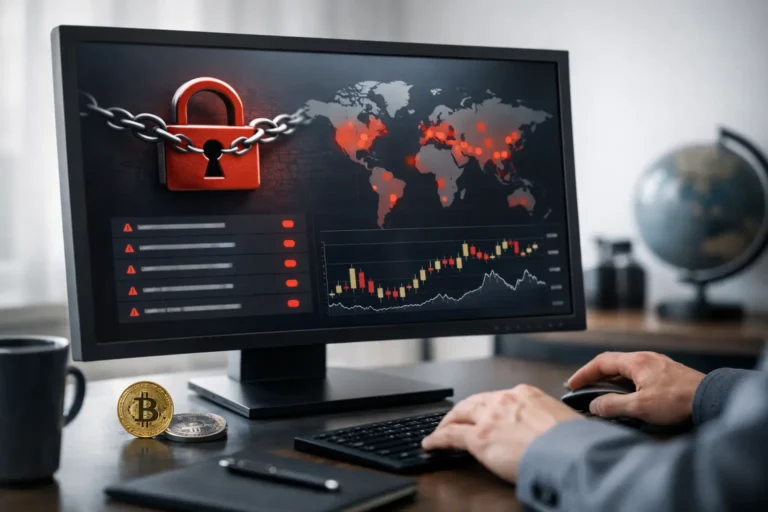

Crypto Seizure Tools That Turn Traces Into Action
A stolen wallet balance can move through dozens of addresses, cross multiple blockchains, enter a bridge, split through swap contracts, and arrive at a centralized exchange before a victim files a report. In that window, crypto seizure tools are not simply analytics platforms. They are operational systems that help investigators convert blockchain activity into defensible intelligence, preserve a clear evidentiary record, and support lawful action before illicit funds disappear.
For law enforcement, financial crime units, exchanges, banks, and recovery professionals, the standard is not merely identifying suspicious addresses. The objective is to establish attribution where possible, identify controlled assets and off-ramps, document the movement of value, and coordinate a freeze, seizure, or recovery process through the appropriate legal and institutional channels.
What Crypto Seizure Tools Actually Do
A blockchain ledger is transparent, but an investigation is rarely simple. Transaction data alone does not explain who controls an address, whether two wallets are linked, what service received the funds, or whether an asset remains reachable. Effective crypto seizure tools organize that complexity into an investigative workflow.
At a practical level, they combine blockchain tracing with entity attribution, risk intelligence, visual analysis, and case documentation. An investigator can start with a victim-provided transaction hash or wallet address, follow funds across hops, identify exposure to known criminal infrastructure, and determine whether assets have reached a regulated service capable of receiving a preservation or freeze request.
The distinction matters. A tracing platform does not itself seize cryptocurrency. Seizure requires legal authority, cooperation from a custodian or counterparty when applicable, and a documented process appropriate to the jurisdiction. The tool’s role is to shorten the time between detection and action while making the underlying analysis understandable to prosecutors, regulators, compliance teams, and courts.
From Blockchain Trace to Seizure-Ready Case
The strongest cases follow the flow of funds without overstating what the data proves. Investigators should be able to distinguish observed on-chain facts from analytical assessments and from confirmed off-chain identity information. That discipline is especially important when criminal actors use intermediary wallets, decentralized finance protocols, mixing services, or cross-chain bridges.
Follow value, not just addresses
Address-based analysis can miss the broader pattern. A fraud operator may use a new deposit address for every victim, while a ransomware affiliate may distribute proceeds across multiple wallets before consolidation. The critical question is whether value can be followed through those movements using transaction relationships, timing, amount patterns, change-address behavior, and known service interactions.
A capable platform enables investigators to trace inbound and outbound flows across supported blockchains, view exposure to relevant entities, and prioritize the paths most likely to lead to a recoverable endpoint. This is particularly valuable when time and personnel are limited. A case team should not spend hours manually reconstructing a transaction graph that software can organize in minutes.
Resolve entities and counterparties
A wallet label is useful only when its source, confidence, and relevance are clear. Investigators need intelligence that connects addresses to exchanges, payment processors, hosted wallet providers, darknet services, scam infrastructure, sanctioned entities, ransomware actors, and other known exposure points.
Entity resolution turns an otherwise anonymous transfer into an operational lead. If stolen funds enter a centralized exchange, the case may move from open-source tracing to a defined response path: preserve records, submit a lawful request, identify associated accounts, and pursue a freeze or restraint order where the facts and jurisdiction support it. If funds enter an unhosted wallet or decentralized protocol, recovery may be more difficult, but the trace can still reveal future cash-out activity or links to a wider criminal network.
Analyze obfuscation without treating it as a dead end
Mixers, peel chains, swaps, privacy-enhancing services, bridges, and asset-hopping techniques can complicate attribution. They do not automatically make analysis impossible. De-mixing methods, probabilistic tracing, transaction-pattern analysis, and cross-chain intelligence can help investigators assess likely fund paths and identify points where illicit proceeds reconnect with identifiable services.
That assessment must be presented carefully. Some links are direct and deterministic. Others are analytical inferences that require stated assumptions and confidence levels. Court-ready work depends on this distinction. A case file should show what occurred on-chain, how an analytic conclusion was reached, and which conclusions require additional corroboration through subpoenas, customer records, device evidence, or witness testimony.
The Operational Features That Matter Most
Not every blockchain analytics product is designed for disruption. For seizure-focused work, the priority is a system that helps teams move from intelligence to action without losing evidentiary integrity.
First, broad blockchain coverage is essential. Criminal proceeds do not respect a team’s preferred network. A trace may begin in Bitcoin, pass through Ethereum-based tokens, cross a bridge, and emerge on a high-velocity chain with different transaction structures. Coverage across major and emerging blockchains reduces blind spots and prevents fragmented investigations.
Second, visual investigation tools should simplify complex fund flows rather than produce decorative graphs. Analysts need to isolate a relevant time period, follow high-value paths, identify clustering behavior, compare exposures, and explain the flow clearly to nontechnical stakeholders. Visualization is most useful when it supports decisions: which exchange to contact, which accounts to prioritize, and what evidence belongs in the affidavit or case package.
Third, case management is a security and quality-control requirement, not an administrative extra. Serious matters involve multiple investigators, evolving intelligence, legal requests, evidence exports, and communications with external partners. A structured case environment preserves investigative notes, sources, labels, transaction records, and decision history. It also reduces the risk that a time-sensitive lead is lost in spreadsheets, screenshots, or disconnected inboxes.
Fourth, alerting and threat intelligence help teams act before the opportunity closes. An address that has been dormant may suddenly send funds to an exchange. A scam cluster may begin targeting new victims. A sanctioned service may appear in a counterparty’s transaction history. Relevant, explainable alerts allow teams to reassess exposure and initiate a response while assets remain within reach.
Why Speed Must Be Matched With Defensibility
The first hours of a crypto theft, ransomware payment, or investment fraud report often determine whether funds can be frozen. Yet speed without rigor creates its own risk. A poorly supported request can be delayed, rejected, or challenged. An unsupported attribution claim can undermine the credibility of an entire investigation.
The right operational approach is to build a seizure-ready record from the beginning. Preserve the victim’s original evidence, record relevant wallet addresses and transaction hashes, capture time-stamped tracing results, document the methodology used, and retain the source of every material label or intelligence finding. When investigators contact an exchange or other virtual asset service provider, they should be prepared to explain the nexus between the funds, the suspected offense, and the requested action.
Jurisdiction also changes the response. A domestic exchange may have established procedures for law enforcement requests, while an overseas provider may require mutual legal assistance, local counsel, or coordination through national authorities. For civil recovery matters, counsel may need to seek emergency relief before assets can be dissipated. Crypto seizure tools cannot remove those legal constraints, but they can give legal and operational teams the evidence needed to act with precision.
Common Gaps That Delay Freezes and Recoveries
Many cases stall before the tracing work is complete. The most common failure is waiting for perfect attribution before notifying a reachable custodian. Where a clear transaction path links stolen funds to a regulated service, a timely preservation request may be appropriate even while the broader investigation continues.
Another gap is treating every exposure as proof of control. A wallet that received funds from an illicit address may be a victim, a service address, an intermediary, or a related criminal wallet. Context matters. Teams should assess direction of flow, timing, transaction behavior, known entity information, and corroborating evidence before making a claim.
Finally, organizations often separate tracing from disruption. Analysts identify the flow, legal teams prepare requests, and external partners receive incomplete information days later. A seizure-oriented workflow connects these functions from the outset. Aegis Financial Forensics supports that operating model by combining blockchain intelligence, visual investigation, case management, and disruption-focused support for institutions confronting illicit digital asset activity.
Building a Seizure-Focused Investigation Capability
Organizations do not need to treat every crypto case as a specialist-only exercise. They do need clear triage rules, trained personnel, and an escalation process for high-risk matters. Fraud teams should know how to preserve transaction evidence. Compliance teams should know when blockchain exposure warrants enhanced review. Investigators should know which facts are needed to support a request to an exchange or a law enforcement partner.
Technology is most effective when paired with defined ownership. Establish who validates the initial trace, who approves external requests, who maintains the evidentiary record, and who coordinates with counsel, regulators, and law enforcement. Test that process before the next major incident, especially where ransomware, sanctions exposure, elder fraud, or high-volume scam activity could create immediate public-safety consequences.
The practical measure of crypto seizure tools is not the number of addresses labeled or graphs produced. It is whether an investigative team can identify a reachable point of control, present reliable evidence, and act quickly enough to protect victims and disrupt the criminal infrastructure behind the transaction.